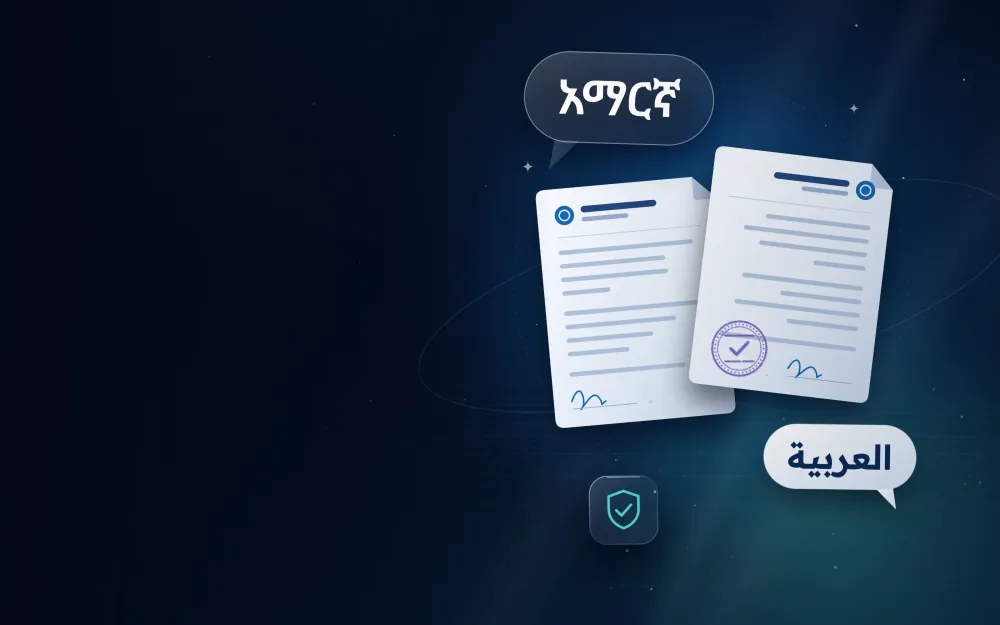
Contract translation in Dubai is the legal translation of an agreement between Arabic and English, or another language, so that a UAE court, notary, bank or counterparty works from an accurate text. Companies, landlords and employees need it before signing, notarizing or filing a claim. Wordcraft's MOJ-licensed legal translators keep every defined term, clause number and party name consistent.
We work for companies, law firms, landlords, investors and individuals in 150+ languages, and we sign a non-disclosure agreement on request.
Why the Arabic Text Carries Weight in Onshore Courts
Arabic is the language of the onshore UAE courts. When a dispute reaches a court in Dubai, Abu Dhabi, Sharjah or another emirate, a contract written in another language is filed with a certified Arabic translation, and the judge and court-appointed experts read that Arabic text. A loose translation weakens the argument before the hearing starts. That is why many companies translate key contracts at signing instead of waiting for a dispute, and why the work belongs with legal translators licensed by the Ministry of Justice.
The DIFC and ADGM courts work in English, so contracts governed by those jurisdictions may not need an Arabic version. A certified translation still helps when one party or an onshore authority needs Arabic.
Contracts We Translate and Where They End Up
| Contract type | Typical reason for the translation |
|---|---|
| Employment contracts, offer letters, non-compete and end-of-service settlements | Labor complaints, court claims, employee records |
| Residential and commercial leases | Rental disputes, landlord and tenant records |
| Sale and purchase agreements | Notarization, property transfers, bank financing |
| Shareholder, partnership and share transfer agreements | Company registry filings, notarization, investor files |
| Supply, distribution, agency and franchise agreements | Negotiation, court or arbitration proceedings |
| Loan agreements, guarantees and settlement agreements | Banks, courts, enforcement |
Defined terms, party names and cross-references are translated the same way every time they appear, so the translated contract reads as one document rather than a patchwork.
Bilingual Arabic–English Contracts Signed as One Document
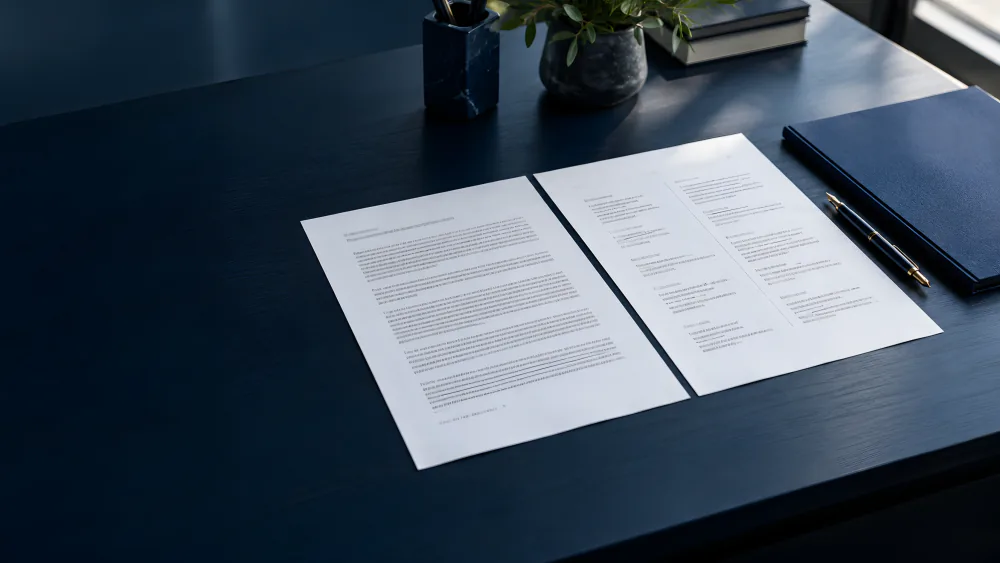
Many UAE contracts are signed in two languages. We lay out Arabic and English in parallel columns so both parties sign a single document. Where the contract names a prevailing language, that clause stays exactly as agreed. When the other side's lawyer revises the English late in negotiation, we update the Arabic column to match before signing, which prevents two versions that say different things.
Notarizing a Translated Contract
Some agreements must be notarized, for example certain sale agreements, memoranda of understanding and company documents. The notary needs a text every signatory understands, so non-Arabic speakers usually sign an Arabic–English version. Wordcraft books the notary appointment as part of the same order; see memorandum of understanding (MOU) and our notarization services. For the difference between translation types, read Arabic ↔ English legal translation.
Contract Translation for Long Agreements: Glossary, Versions, Deadlines
- Send an editable file if you have one. A Word version keeps numbering and cross-references intact; scans and PDFs work too.
- We agree a glossary first for any contract with a definitions clause, so "the Purchaser" never turns into "the Buyer" halfway through.
- Revisions are tracked. When a new draft arrives, we translate only the changed clauses and mark them for your review.
- Timing is set in your quote, sent within 10–30 minutes of receiving the page count and signing or filing date.
- Checks: a second linguist compares figures, dates and clause references with the source before an MOJ-licensed legal translator stamps each page.
If the dispute has already started, see court judgment translation for pleadings and evidence.
Frequently Asked Questions
Does an English contract need an Arabic translation in the UAE?
For onshore court cases, yes: the court works from a certified Arabic translation. Many parties sign in both languages from the start. DIFC and ADGM courts work in English.
Can you prepare a bilingual Arabic–English contract?
Yes, in parallel columns, with any prevailing-language clause kept exactly as the parties agreed.
Which version prevails if the Arabic and English differ?
The contract's own language clause decides. If it is silent, ask your lawyer. We translate the clause faithfully and point out any gap between the two versions.
Is my contract kept confidential?
Yes. Only the team on your order opens the file, and we sign an NDA on request.
Do you review the legal content of the contract?
No. We translate faithfully and do not give legal advice, though we flag inconsistencies we notice between language versions.
Last updated: September 2026